MAHAN plan for covid-19
Situation assessment:
- COVID 19 has become pandemic.
- In India, COVID cases are 16,960,172.
- Deaths (1.13%)1,92,311
- In Maharashtra: COVID cases are as follows:
- Total cases: 4295027
- Deaths: 64760 (1.5%)
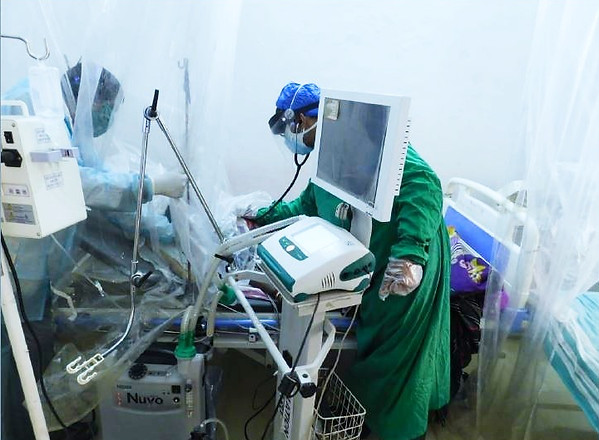
Now government has accepted Corona positive cases in Melghat. Government has established sample collection centre and isolation ward/COVID care centre for COVID patients in Dharni. More than 600 confirmed COVID positive cases in Melghat. MAHAN NGO is providing hospital based and community-based treatment services and behaviour change communication program for COVID-19 and food to 927 poor tribal children, pregnant mothers. We have treated more than 100 COVID positive patients.
Emergency need:
As Melghat is difficult to access, hilly, forest, tribal area with scarcity of healthcare infrastructure, poverty (85%), semiliterate/illiterate tribal (>50%), ignorance, un-hygienic living, close community contact and lack of diagnostic facilities, it is disaster of COVID in Melghat due to intracommunity spread. Tribal youths (> 30%) temporarily migrated to cities for work. Due to outbreak of COVID 19 in cities and Holi, most of laborers (>20000) have returned back to Melghat from March 2021, who may be COVID carriers.
Labourers are affected due to lockdown as they are not habitual of saving money and are dependent on daily wages for food, drugs, etc. Tribal especially, pregnant, lactating mothers and under 5 children (U5C) are most vulnerable for COVID lockdown induced starvation. Due to costly transportation, Melghat tribal are reluctant to go to Amravati for Corona testing.
Patients who are already in serious condition can lose their life due to time consuming difficult travel through mountains. Without proper diagnostic facilities physicians are afraid of treating patients. Many deaths of non-Corona patients are happening due to corona panic. We referred 4 poor tribal patients to Amaravati for higher treatment, all of them died due to lack of surgery or ICU care in government hospitals. Undiagnosed milder cases of Corona will spread COVID 19 in Melghat due to ignorance.
Melghat is incapable to handle COVID crisis. Due to scarcity of corona testing facility in Melghat, many cases are not diagnosed and many COVID patients are dying because of lack of proper treatment and undiagnosed asymptomatic COVID cases are spreading infection in community. Fair distribution of resources with special focus on vulnerable area is must.
As ICDS has stopped hot cooked food to anganwadis, U5C, pregnant and lactating mothers will suffer severe malnutrition and increase maternal mortality rate (MMR), low birth weight (LBW), premature babies and child deaths (U5MR). They are in need of food. There is need of active screening for COVID-19 i.e. nasopharyngeal swab collection, community based COVID research, hospitals for treatment of Non-Corona serious patients, drugs and awareness about COVID.
Proposed Solution and Mechanism of Implementation
Project time period : 1ST May 2021 to 31st April 2022
A) Community based interventions: 33 villages. It will be cluster randomized control field trial.
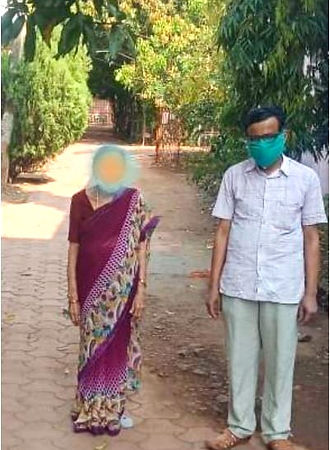
1. Intensive behavior change communication (BCC).Home visits by village health workers (VHWs) and BCC supervisor for corona prevention, travel ban, social distancing, hand washing, self-monitoring for COVID-19 symptoms and consult healthcare for symptoms. We will use one to one counselling, SMS, Digital, social media and audiovisuals.
2. Supply of local therapeutic food(LTF) to all severely malnourished children (SMC).We require LTF 3 to 4 times a day for 300 SMC (3 months).
3. Supply of food to all pregnant and lactating mothers.We will supply balanced diet to >200 pregnant and >200 lactating mothers for every 3 months. It will reduce maternal mortality rate (MMR), Low birth weight (LBW), premature babies, SMC and under 5 children mortality rate (U5MR).
4. Supply of essential material e.g. face mask, drugs, food, soap, water, etc. to villagers.
5. Supply of pulse oximeter in villages: 2-3 per village.
6. Supply of personnel protection equipment’s (PPE) to high risk people e.g. frontline health care workers and care takers of COVID cases.
7. Identification of corona cases- MAHAN will do surveillance of people for COVID-19. Well-trained VHWs can collect Nasopharyngeal swabs (NPS) in Viral transport media and send to our hospital for further testing e.g. Rapid antigen test/ RTPCR at NIV/Amaravati . Lab. Technician/ nurses will collect blood for Antibody testing.
8. Chemoprophylaxis of frontline health care workers and high-risk people in community e.g. asymptomatic close contact of confirmed cases.
9. Immunization by corona vaccine when available.
10. Treatment of confirmed corona cases by drugs by VHWs.
11. Quarantine of indicated persons in villages for 14 days.
12. Real time death tracking.
13. Verbal autopsy of all deaths to know cause of death.
14. MITS if possible.
We will monitor the morbidity and mortality in 33 control villages without any intervention.
B) Hospital based interventions:
1) Identification of corona cases –
a) We will collect nasopharyngeal and throat swabs from suspected cases and send to Govt. laboratory , Amaravati, NIV Pune or GMC, Nagpur for testing. Or if possible, in our set up;
b) Diagnosis by PCR and rapid antigen and antibody test (if available) and development of advanced BSL 3 level laboratory if sufficient funds are given.
2) Treatment of serious COVID cases by drugs, oxygen and ventilators.
3) Chemoprophylaxis of health care workers: Asymptomatic health worker involved in care of suspected or confirmed case will receive appropriate chemoprophylaxis. Expected beneficiaries: 100 to 200 hospital and frontline workers.
4) Immunization by corona vaccine when available.
5) Isolation wards development as per international guidelines.
6) Robotic intervention to treat highly contagious corona cases -ICU care when enough funds will be available.
We will work in close association with government.
Monitoring mechanism:
Three tier monitoring system. The VHW work will be monitored by weekly visits of medical, BCC and data collection supervisors. Program managers will monitor work of supervisors and VHW daily and once in 15 days respectively. The project director will monitor work of underlying staff through daily report, weekly meetings and monthly discussions and reports.
The Monitoring indicators are:
- Crude death rate
- Age specific mortality rate
- Cause-Specific Death Rate/ Disease specific mortality rates.
- Proportional mortality rate from a disease.
- Prevalence of COVID 19 or other respiratory infections.
- Prevalence of SMC and LBW.
- MMR, U5MR.
Proposed outcome/result and impact:
1) Reduction in prevalence of COVID 19 or other respiratory infections in our 30--intervention area (IA) villages.
2) Reduction in deaths and CFR of COVID 19 or other respiratory infections in IA.
3) Maximum number of suspected cases will be screened.
4) Community will become self-sustainable to tackle the issue of COVID 19 or other respiratory infections.
5) Reduction in prevalence of SMC, MMR, U5MR, maternal malnutrition and age specific mortality rate (16-60 years) in 30 intervention villages